

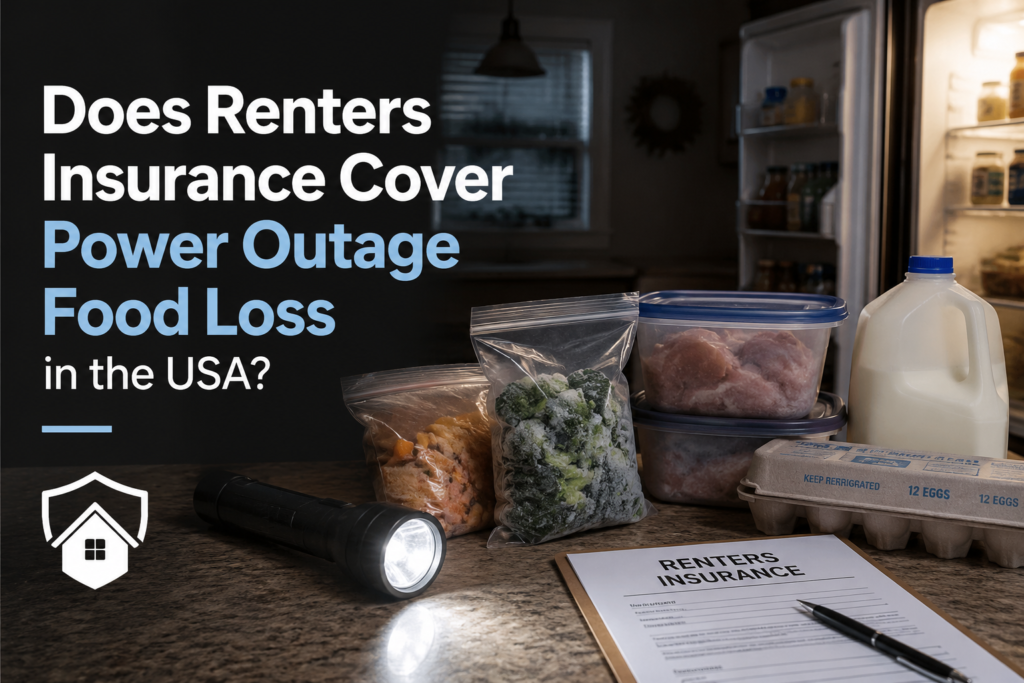
Power outages can happen unexpectedly across the United States and often create more problems than simply losing access to electricity. One of the biggest concerns for renters in the USA is the food stored inside their refrigerator and freezer. When electricity remains unavailable for several hours or days, perishable items such as meat, dairy products, frozen foods, vegetables, and prepared meals can spoil quickly. Replacing all of those groceries can become expensive, especially for families in the United States who buy food in bulk or keep stocked freezers.
As a result, many renters in the USA ask an important question: Does renters insurance cover power outage food loss? The answer is not always straightforward. In some situations, renters insurance may reimburse you for spoiled food, while in others, the loss may not be covered at all. The determining factor is usually the cause of the power outage and the specific terms outlined in your renters insurance policy in the United States.
At QuoteJoy, we often see renters across the USA assume that any food spoiled during a blackout will automatically be covered by insurance. Unfortunately, that assumption can lead to disappointment when a claim is denied. Understanding how food spoilage coverage works before an outage occurs can help you make informed insurance decisions and avoid unexpected financial losses in the United States.
This comprehensive guide explains when renters insurance covers food spoilage in the USA, what exclusions commonly apply, how much compensation you may receive, and what steps you should take to file a successful claim.
Understanding How Renters Insurance Works in the USA
Before discussing food spoilage coverage specifically in the United States, it is important to understand the purpose of renters insurance. Many renters in the USA mistakenly believe their landlord’s insurance policy protects everything inside the rental unit. In reality, a landlord’s policy generally covers the building structure itself, while renters insurance protects the tenant’s personal belongings and certain financial liabilities.
A standard renters insurance policy in the United States typically includes several forms of protection. Personal property coverage helps pay for damaged or stolen belongings. Liability coverage protects you if you accidentally cause injury or property damage to another person. Additional living expense coverage may help pay for temporary housing and other costs if a covered event makes your rental unit uninhabitable.
Food stored inside your refrigerator and freezer in the USA is generally considered personal property. However, whether insurance pays for spoiled food depends on the circumstances that caused the loss.
Key components of renters insurance in the United States include:
- Personal property protection
- Personal liability coverage
- Medical payments coverage
- Additional living expenses coverage
- Optional endorsements and add-ons
Understanding these coverage categories provides a foundation for understanding how food spoilage claims are evaluated in the USA.
Does Renters Insurance Cover Food Spoilage After a Power Outage in the USA?
In many situations throughout the United States, renters insurance can cover food loss caused by a power outage. However, coverage is usually available only when the outage results from a covered peril listed in the insurance policy. Insurance companies in the USA do not simply look at the spoiled food itself. Instead, they investigate what caused the power interruption.
For example, if a lightning strike damages electrical infrastructure and causes a prolonged outage in the United States, many renters insurance policies may cover the resulting food spoilage. Likewise, if a severe windstorm knocks down power lines and your food spoils before electricity is restored, you may qualify for reimbursement.
The situation becomes different when the outage occurs because of routine utility company failures, planned maintenance, or equipment malfunctions unrelated to covered perils in the USA. In these cases, coverage may not apply.
The specific outcome depends on factors such as:
- The cause of the outage
- The wording of your insurance policy
- Coverage endorsements attached to the policy
- Your deductible amount
- Food spoilage coverage limits
Because insurance contracts vary throughout the United States, reviewing your policy details is essential before assuming coverage exists.
What Insurance Companies Mean by a Covered Peril in the United States
The term “covered peril” plays a critical role in determining whether your claim will be approved in the USA. A covered peril refers to an event specifically listed in your insurance policy as eligible for coverage. When that event directly causes damage or loss, the insurer may provide compensation according to the terms of the policy.
Many standard renters insurance policies in the United States cover events such as fire, lightning, windstorms, smoke damage, explosions, vandalism, and certain types of sudden accidental damage. If one of these events causes a power outage that leads to food spoilage, the insurance company may reimburse the value of the lost groceries.
For example, imagine a severe thunderstorm moves through your area in the USA and lightning strikes a transformer serving your neighborhood. The outage lasts for two days, causing hundreds of dollars worth of frozen food and refrigerated items to spoil. Because the power loss resulted from lightning, which is generally a covered peril, your claim may be eligible for reimbursement.
Common covered perils that may trigger food spoilage coverage in the United States include:
- Lightning strikes
- Residential fires
- Windstorms
- Hailstorms
- Smoke damage
- Explosions
- Certain electrical incidents
- Falling objects damaging power infrastructure
The exact list varies among insurance companies in the USA, which is why QuoteJoy always recommends reviewing policy documents carefully before purchasing coverage.
Situations Where Food Spoilage Coverage Usually Applies in the USA
One of the most common scenarios in the United States involves severe weather. Storms regularly damage utility infrastructure throughout the USA, causing widespread outages. When these weather-related events fall within the list of covered perils, insurance companies are often willing to reimburse food losses.
Consider a renter in the United States who stores several hundred dollars worth of groceries in a freezer. A powerful windstorm knocks down utility poles, leaving the neighborhood without electricity for 36 hours. During that time, frozen meat, seafood, vegetables, and prepared meals thaw and become unsafe to consume. Because the outage resulted from a covered weather event, the renter may qualify for reimbursement.
Coverage may also apply when fire damages electrical systems either inside the apartment building or elsewhere in the power distribution network in the USA. Even if the fire never reaches the renter’s unit, the resulting outage can sometimes trigger food spoilage protection.
Examples of situations that may qualify in the United States include:
- Lightning damaging transformers
- Fire destroying electrical infrastructure
- Windstorms knocking down power lines
- Covered damage to apartment electrical systems
- Certain accidental electrical incidents
While coverage is never guaranteed, these situations generally have a higher likelihood of claim approval.
Situations Where Claims Are Commonly Denied in the USA
Just as important as understanding covered situations is understanding what insurance companies often exclude in the United States. Many renters in the USA are surprised to learn that routine power outages do not automatically qualify for reimbursement.
For example, utility companies occasionally perform scheduled maintenance that requires temporary service interruptions in the USA. Because these outages are planned rather than caused by a covered peril, insurance companies generally do not provide compensation for resulting food losses.
Similarly, aging infrastructure and equipment failures can cause unexpected outages throughout the United States. Although these events may inconvenience homeowners and renters alike, they often fall outside the scope of standard renters insurance coverage.
Claims may also be denied when food spoilage results from appliance failure rather than a power outage in the USA. If the refrigerator compressor stops working while electricity remains available, many insurers consider the problem a maintenance issue rather than an insured loss.
Common exclusions include:
- Utility company equipment failure
- Scheduled maintenance shutdowns
- Mechanical refrigerator breakdowns
- Wear and tear
- Negligence
- Flood-related outages (without separate coverage)
- Earthquake-related outages (without separate coverage)
Understanding these exclusions can help renters in the United States set realistic expectations before filing a claim.
How Much Compensation Can You Receive for Spoiled Food in the USA?
Food spoilage coverage limits vary considerably among insurance providers in the United States. Some insurers automatically include a small amount of coverage within their standard renters insurance policies, while others offer food spoilage protection as an optional endorsement.
Coverage limits often range from a few hundred dollars to several thousand dollars in the USA. The amount available depends on the insurer, policy type, and endorsements selected.
Even when coverage exists, reimbursement is rarely unlimited. Insurance companies establish maximum payout amounts to control risk exposure. As a result, renters in the United States should understand their policy limits before assuming all food losses will be covered.
Factors affecting reimbursement include:
- Coverage limits
- Deductible amount
- Cause of loss
- Documentation provided
- Policy endorsements
- Insurer claim guidelines
At QuoteJoy, we encourage renters throughout the USA to review coverage limits annually, especially if they regularly store large amounts of food.
Final Thoughts for Renters in the United States
Power outages can lead to significant grocery losses throughout the USA, particularly when refrigerators and freezers remain without electricity for extended periods. Although renters insurance may cover food spoilage in some situations, coverage depends heavily on what caused the outage and the language of your policy in the United States.
The most important lesson for renters in the USA is that coverage is not automatic. Understanding covered perils, exclusions, limits, and deductibles before an outage occurs can help prevent unpleasant surprises later. A few minutes spent reviewing your policy today could save you hundreds of dollars in uncovered losses tomorrow.
If you’re comparing renters insurance options in the United States or looking for guidance on policy coverage, QuoteJoy can help you better understand available protections and make more informed insurance decisions.
Frequently Asked Questions About Power Outage Food Loss Coverage in the USA
Does renters insurance cover food spoiled during a blackout in the USA?
It may cover food spoilage if the blackout was caused by a covered peril such as lightning, fire, or windstorm damage in the United States.
Is spoiled food considered personal property in the United States?
Yes. Food stored in refrigerators and freezers is generally treated as personal property under renters insurance policies in the USA.
Will renters insurance cover a broken refrigerator in the USA?
Most standard policies do not cover food spoilage caused solely by refrigerator mechanical failure.
How do I prove food loss to my insurance company in the United States?
Photographs, grocery receipts, bank statements, utility outage notices, and detailed inventories can support your claim in the USA.
Does every renters insurance policy in the USA include food spoilage coverage?
No. Coverage varies by insurer and may require an endorsement in some cases.
Can I claim frozen food that thawed during a storm in the United States?
If the storm is a covered peril and the outage directly caused the food loss, your policy may provide reimbursement in the USA.