

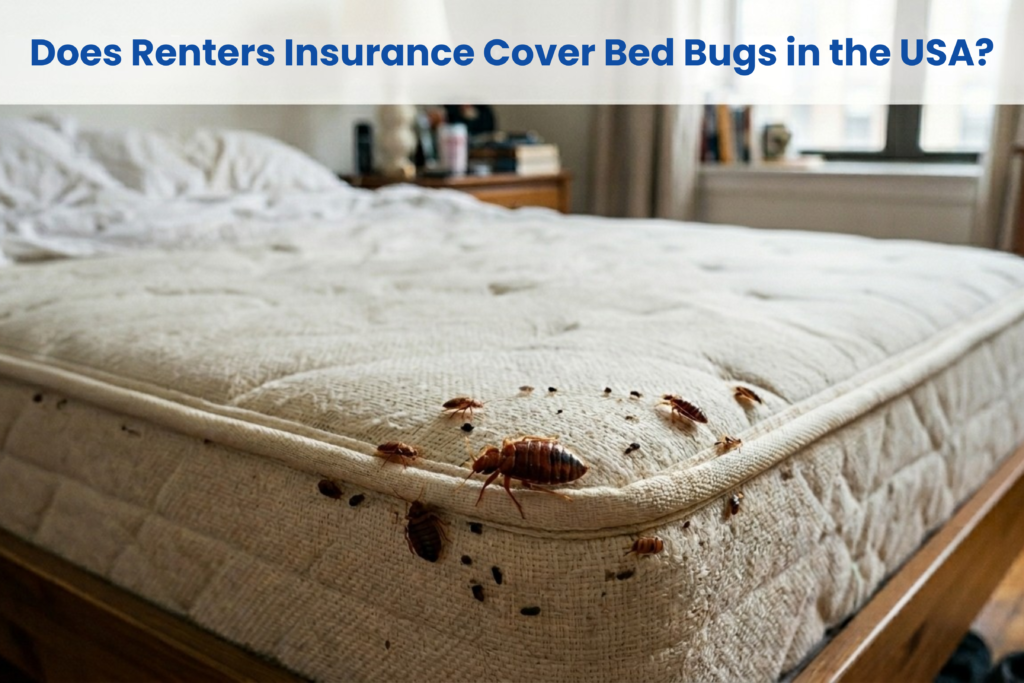
If you’ve just spotted bed bugs in your apartment or worse, found bites on your skin one morning the next question after “how did this happen” is almost always: does my renters insurance cover this? It’s a fair question. You pay a monthly premium specifically so you don’t have to absorb expensive surprises like fire, theft, and water damage.
Bed bugs in the United States cost an average of $1,500 to $3,000 per professional treatment, and a serious infestation often requires multiple visits, replacement of mattresses and furniture, laundry costs, and sometimes a hotel stay during fumigation. The total can easily exceed $5,000 a financial gut-punch for the average American renter.
The honest answer is one most U.S. renters don’t want to hear: standard renters insurance policies in the United States almost never cover bed bug infestations. That’s true across all major American carriers, in every state. But that doesn’t mean you have no options it just means the right options live outside your renters policy.
In this guide, we’ll walk through exactly why bed bugs are excluded, who is legally responsible for treatment in the U.S., what your renters policy still does and doesn’t do in a bed bug situation, and the specific steps an American renter should take the moment they discover bed bugs. Every detail you actually need is here nothing skipped.
The short answer: no, renters insurance does not cover bed bugs in the USA
Standard renters insurance policies sold by every major U.S. insurer specifically exclude bed bug infestations under the broader “infestation” or “vermin” exclusion. This same exclusion blocks coverage for rodents (mice, rats), other insects (cockroaches, termites, fleas), and generally anything classified as a pest. Whether you’re insured by a national brand carrier or a smaller regional one, the language is essentially identical: bed bugs are not a covered peril.
So in a typical U.S. bed bug situation, your renters policy will not pay for:
- Professional extermination services (heat treatment, chemical treatment, or fumigation)
- Replacement of infested mattresses, box springs, headboards, or upholstered furniture
- Hotel or temporary housing costs while your apartment is being treated
- Specialized laundry services or replacement of infested clothing
- Medical bills from bed bug bites or related skin treatment
- Damage to neighboring units if the infestation spreads
That’s a long list of expensive items and none of them fall to your renters insurance. Let’s unpack exactly why, and then what does cover them.
Why are bed bugs excluded from renters insurance in the U.S.?
U.S. insurance is built around the principle of covering sudden, accidental, and unexpected events. A pipe bursts. Lightning strikes. A thief breaks in. Insurers can price the risk because these events are statistically random across the population they cover. Bed bugs don’t fit that model for three specific reasons American carriers cite:
- Gradual development. Bed bug infestations build over weeks or months. They aren’t “sudden” in the insurance sense, even if they feel sudden to the renter who just discovered them.
- Maintenance / housekeeping issue. U.S. insurers classify pest control as part of regular property maintenance a responsibility shared between renter and landlord, depending on state law.
- Adverse selection risk. If bed bugs were covered, people with active infestations would buy policies immediately to claim. Carriers cannot price that fairly across the policyholder pool.
This isn’t unique to bed bugs. The same “vermin / infestation” exclusion blocks coverage for mice, rats, cockroaches, termites, fleas, and most other pests in nearly every U.S. renters policy. So if you’ve ever wondered why renters insurance covers a $30,000 fire but not a $2,500 bed bug treatment, this exclusion is the reason.
What CAN cover bed bug treatment in the U.S.?
Just because renters insurance won’t pay doesn’t mean American renters have to absorb the full cost. There are four real options:
1. Your landlord (usually the primary responsibility in the U.S.)
In most U.S. states, the landlord is legally responsible for providing a habitable rental unit a principle known as the implied warranty of habitability. Bed bug infestations almost always violate this warranty, which means landlords are typically required to pay for professional treatment. The exact rules vary by state:
| State | Landlord responsibility | Notes |
|---|---|---|
| California | Yes — strong tenant protections | CA Civil Code 1941.1 covers infestations |
| New York | Yes — landlords must treat | NYC has specific bed bug disclosure laws |
| Maine | Yes — specific bed bug statute | Maine’s bed bug law is one of the toughest in the U.S. |
| Arizona | Yes (with limits) | Tenant must report promptly |
| Florida | Yes — habitability standard | Landlord must remediate within reasonable time |
| Texas | Generally yes | Tenants have repair-and-deduct rights |
| Most other states | Yes — via habitability laws | Specifics vary |
Important exceptions: if the landlord can prove the tenant brought the bed bugs into the unit (e.g., from prior travel, used furniture, or another infested apartment), some U.S. states allow the cost to be passed to the tenant. This is exactly why prompt reporting and documentation matter so much (covered below).
2. The tenant’s landlord-paid pest control benefit
Many U.S. landlords especially larger apartment management companies carry building-wide pest control contracts. If your building does, treatment is usually free to you. Ask your property manager whether your building has a master pest contract before you do anything else.
3. Standalone bed bug insurance
A small but growing number of specialty U.S. providers offer bed bug insurance as a separate policy. Coverage typically includes treatment costs, hotel stays during fumigation, and sometimes furniture replacement, with annual premiums around $50 to $200. Not widely advertised, but available in most U.S. states for renters who want a financial safety net.
4. The tenant’s renters insurance in one narrow scenario
This is the only path where your renters policy can still help, and it’s narrow: if a covered peril triggered the infestation (extremely rare), some coverage might apply. For example, if a hurricane damages your building and bed bugs migrate from a damaged neighboring unit into yours, the resulting damage *could* be argued under the covered peril. This is genuinely uncommon don’t count on it but it’s worth knowing the door isn’t 100% closed in unusual circumstances.
Why your renters policy is still worth having (even if it excludes bed bugs)
One of the biggest mistakes U.S. renters make after learning about the bed bug exclusion is dropping their renters policy entirely. That’s a costly overreaction. Standard renters insurance covers a wide range of risks that are far more financially devastating than bed bugs:
| Covered by renters insurance | Typical claim value (USD) |
|---|---|
| Theft of belongings | $500–$10,000+ |
| Fire damage | $5,000–$50,000+ |
| Sudden water damage (e.g., burst pipe) | $2,000–$15,000 |
| Liability (someone injured in your unit) | $10,000–$300,000+ |
| Lightning / electrical surge damage | $500–$5,000 |
| Loss of use (hotel after a covered event) | $500–$3,000+ |
Renters insurance in the U.S. typically costs only $15 to $25 per month and pays out far more than it costs over time for most renters. Bed bug exclusion is a real gap but it’s a narrow gap in a policy that protects against far bigger risks. Don’t throw the policy out because of one exclusion.
Step-by-step: what to do if you find bed bugs in your U.S. apartment
If you’ve just discovered bed bugs, the next 48 hours are critical not just for stopping the infestation, but for protecting your legal position with your landlord and for any insurance possibilities. Follow these steps in order:
- Document everything immediately. Take time-stamped photos and video of the bed bugs themselves (look in mattress seams, headboard, baseboards), any bites on your skin, and any droppings or shed skins. This evidence is critical if your landlord disputes the issue later.
- Do not move belongings to other rooms or units. This is the single most common mistake. Moving infested items spreads the problem and can shift legal responsibility to you.
- Notify your landlord in writing the same day email is best because it creates a timestamped record. Be specific about what you found and when. Request immediate professional treatment.
- Keep copies of everything. Save every email, text, and written communication with the landlord, neighbors, and any pest control company involved.
- Check your lease for pest-control clauses. Some U.S. leases specifically address bed bug treatment responsibility. Most are silent, which defaults to state habitability law.
- Look up your state and city’s bed bug laws. Many U.S. cities (New York, San Francisco, Chicago) have specific bed bug ordinances beyond state law.
- Do not begin DIY treatment. Foggers and store-bought pesticides usually make bed bugs harder to eliminate (they cause bugs to scatter) and can complicate your legal case. Wait for the professional treatment your landlord arranges.
- If your landlord delays or refuses, consult a U.S. tenant rights organization in your city or state. Many states allow “repair and deduct” paying for treatment yourself and subtracting it from rent but the rules vary, so verify locally before acting.
- Keep all receipts. If you end up paying anything yourself (laundry, hotel, replacement bedding), keep documentation. You may be able to recover it from the landlord later.
Throughout this process, your goal is twofold: get the bed bugs eliminated as fast as possible, and preserve your right to make the landlord pay. Documentation is what protects you on both fronts.
How U.S. renters can prevent bed bug situations in the first place
Prevention is dramatically cheaper than treatment. A few practical steps that meaningfully reduce U.S. renters’ bed bug risk:
- Inspect used furniture before bringing it home. Used couches, mattresses, and headboards are the single most common bed bug introduction route in American apartments. Either avoid used upholstered items entirely, or inspect every seam and joint with a flashlight.
- Be cautious in hotels and during U.S. travel. Inspect hotel mattress seams and headboards before unpacking; keep luggage off the floor and away from the bed. After traveling, wash all clothes on hot and dry on high before putting them away.
- Use mattress and box spring encasements. Bed bug-proof encasements (around $30–$80 in the U.S.) trap any bugs inside and make detection far easier.
- Reduce clutter. Bed bugs thrive in piles of clothes, stacked boxes, and unused belongings. Less clutter, fewer hiding spots.
- Inspect during apartment hunting. Check mattress seams, behind headboards, and along baseboards during any U.S. apartment showing, especially in buildings with shared walls.
- Ask about building history. It’s reasonable for a U.S. renter to ask whether the unit or building has had recent bed bug issues. Some states (like New York City) actually require landlords to disclose.
What happens if you spread bed bugs to neighbors?
One of the most stressful aspects of an American bed bug situation is the possibility of an infestation spreading to neighboring units. If a neighbor claims you spread bed bugs to them, the legal and financial picture gets more complex:
- Your renters insurance liability coverage generally won’t help here. Liability covers sudden, accidental incidents not gradual pest spread, which is excluded under the same logic as the bed bug exclusion itself.
- You can be held responsible if the landlord or neighbor can prove the infestation originated with you. This is part of why prompt reporting and documentation matter so much it positions you as the responsible tenant who acted quickly.
- Tenant insurance is not landlord insurance. Your policy never covers the building structure or neighboring units that’s the landlord’s landlord insurance responsibility for the building.
The single best defense against spread allegations is rapid action and complete documentation from the moment you discover the issue.
Frequently asked questions
Does renters insurance ever cover bed bugs in the U.S.?
Almost never. Standard U.S. renters policies exclude bed bug infestations under the same vermin/infestation exclusion that blocks rodents, roaches, and termites. The only narrow exception is when a covered peril (like a hurricane causing structural damage) directly triggers a bed bug situation extremely rare in practice.
Who pays for bed bug treatment in an American apartment?
Typically the landlord, under your state’s implied warranty of habitability. Most U.S. states require landlords to provide a habitable unit, which includes pest-free conditions. The exception is when the landlord can prove the tenant brought the bed bugs into the unit which is exactly why prompt reporting and documentation matter.
Can my landlord charge me for bed bug treatment in the U.S.?
In some cases, yes. If your landlord can prove you introduced the bed bugs for example, from prior travel, used furniture, or a previous infested apartment some U.S. states allow the cost to be passed to the tenant. Report bed bugs immediately and document everything to protect your position.
Does renters insurance cover hotel costs while my apartment is treated for bed bugs?
No. The “loss of use” or “additional living expenses” coverage in U.S. renters insurance only pays for hotel stays when a covered peril makes the unit uninhabitable. Since bed bugs are excluded, related hotel costs are also excluded. Your landlord may be responsible for hotel costs under your state’s tenant law ask in writing.
Is there separate insurance I can buy for bed bugs in the United States?
Yes, a small but growing number of specialty U.S. providers offer standalone bed bug insurance. Coverage typically includes treatment, hotel stays, and sometimes furniture replacement, for annual premiums around $50 to $200. Not widely advertised but available in most American states.
If bed bugs damage my furniture, will renters insurance pay for replacement?
No, the same exclusion applies. Damaged or contaminated furniture from a bed bug infestation isn’t covered under standard U.S. renters insurance. Your landlord may be responsible for replacement under your state’s habitability law if the infestation originated in the building.
Should I still get renters insurance if it doesn’t cover bed bugs?
Absolutely yes. Bed bug exclusion is a real gap, but it’s a small one in a policy that protects against far bigger risks fire, theft, water damage, and personal liability for just $15–$25 a month in the U.S. The protection against a single fire or liability lawsuit is worth more than years of premiums combined.
The bottom line
Renters insurance in the United States almost never covers bed bug infestations every major U.S. carrier excludes them under the standard vermin and infestation clause that also blocks rodents, roaches, and termites. Treatment costs, replacement of belongings, and hotel stays during fumigation are all outside what your renters policy will pay. Buying a more expensive policy or a different carrier won’t change this; the exclusion is essentially universal across the American market.
The real protection lives in your state’s tenant laws. In most U.S. states, landlords are legally responsible for treating bed bug infestations under the implied warranty of habitability unless they can prove the tenant introduced the bugs. That’s why prompt reporting, careful documentation, and acting before doing any DIY treatment matter so much. Your renters insurance is still worth keeping for everything else it covers, but bed bug protection comes from your lease, your state’s tenant rights laws, and (optionally) a standalone bed bug policy if your risk tolerance is low.
If you’re shopping renters insurance now and want to make sure you understand exactly what’s covered before signing up, compare insurance quotes on QuoteJoy and review real coverage details from top U.S. carriers. If you own rental property and want to understand the other side of this coverage the landlord’s responsibilities and the right landlord policy for your building see our landlord insurance hub and start a landlord quote here. For broader home coverage questions, our home insurance page covers homeowner-side options, or contact our team if you’d like help reading the fine print on your specific policy.